
Sources for South Lake Tahoe Previous Residents
The strongest past-resident trail combines current land evidence with sources that describe people at a particular time. The table gives each source its proper role. A deed can show a title transfer. A directory or census can show a listed or enumerated household. A permit can date a project. Probate and an obituary can explain a transfer or death. None should be stretched beyond the fact it records.
| Source | Years or coverage | Where held | What it shows |
|---|---|---|---|
| Assessor current and historical detail | Current; older details described as 2018 and prior, earliest unstated | El Dorado parcel portal and roll | Situs, APN, deed reference, values, structure |
| Recorder index | Online start year not stated | Self-Service, Tahoe counter, Placerville | Grantor, grantee, date, type, legal references |
| State Archives deeds | 1851 to 1902 | California State Archives and microfilm | Early county deed books |
| Directory evidence | Verified editions and isolated report years from 1971 to 2017 | Official filing and repository research | Address-linked listings for known years |
| Census | Public through 1950 | National Archives | Enumerated household, relationships, ages and birthplace |
| Probate and obituary | Case or publication specific | Court, newspapers, local sources | Heirs, death clues, family and address links |
Use the source that covers the missing period. South Lake Tahoe's city records begin with incorporation in 1965, so earlier house histories often start with county deeds, plats, assessment, phone evidence, and census.
South Lake Tahoe Current Deed Records
Enter the physical address in El Dorado Online Property Information. The result can show the APN, situs, tax-rate area, property type, land and improvement values, exemptions, building characteristics, and current document number and date. Copy the document reference exactly. It is the handoff from parcel facts to the Recorder's named-party index.
The public result does not show the secured owner. If the owner or mailing address is needed, use the Local Assessment Roll at an assessor lobby kiosk or request standard roll data. A roll entry is an assessee and tax-mailing clue, not proof of who lived at the property.
The Recorder-Clerk Self-Service portal is the current document starting point.
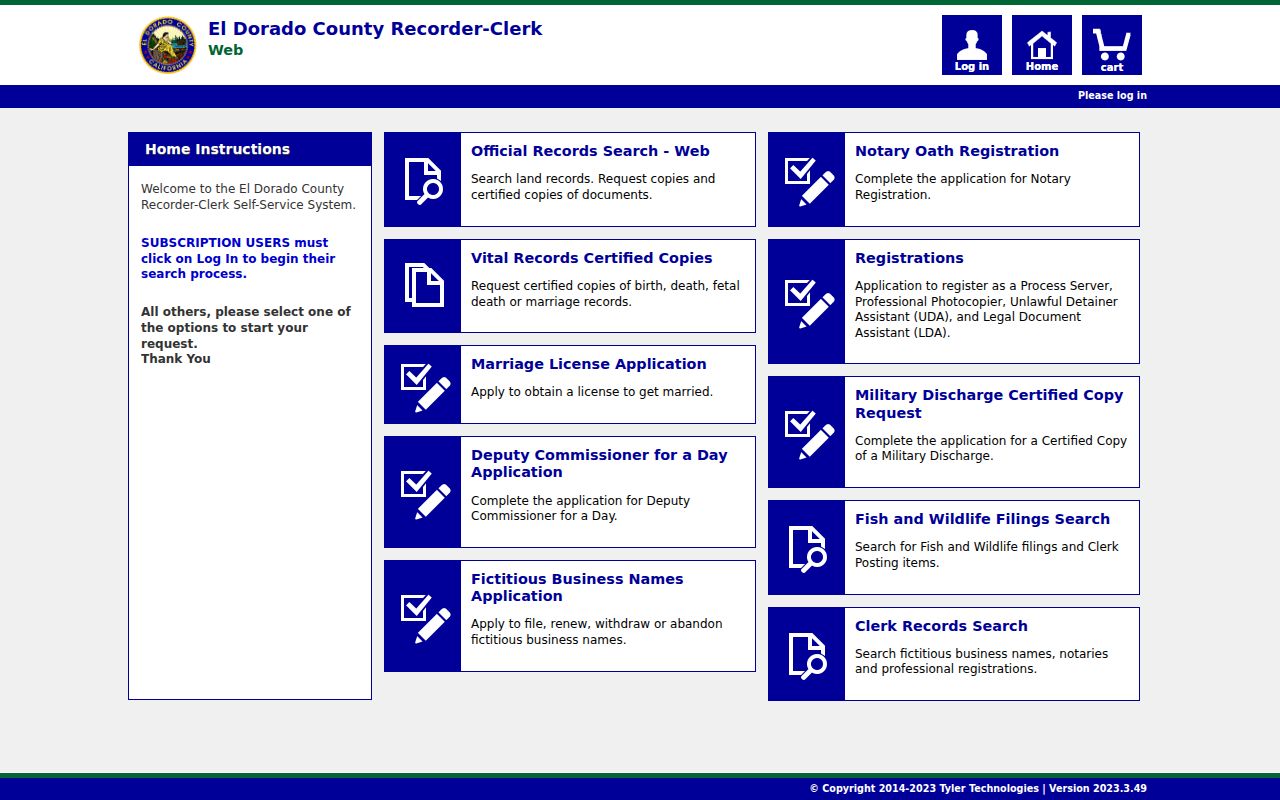
Save a copy of the query details and date searched. The portal's accessible pages do not state a dependable online start year or complete image coverage, so older work may require the counter or State Archives.
South Lake Tahoe Deed Records Trail
To trace previous residents through title, identify the current grantee and seller in the latest recorded instrument. Search the seller as an earlier grantee within a date range before the current deed. Read the legal description, book or page reference, and APN when present. Repeat until the search reaches the earliest reliable entry or a gap that needs an office record.
- Start with the current APN and current document number from the parcel result.
- Open the Recorder index and inspect both names, the recording date, document type, and land references.
- Use each prior seller as a new grantee search, while trying spelling variants, trusts, and organizations.
- Compare legal descriptions, subdivision, lot and block, or recorded map before treating two instruments as the same land.
- Order the permitted copy when the index row is not enough to establish the transfer.
- Grantor
- The person or entity conveying an interest in a recorded instrument.
- Grantee
- The person or entity receiving the interest named in that instrument.
- Chain of title
- A sequence of recorded transfers used to follow ownership of the same legal parcel.
- Legal description
- The land description in the instrument. It may be more reliable than a changed street label.
The Recorder-Clerk department page identifies the custodian and other recorded-document services.
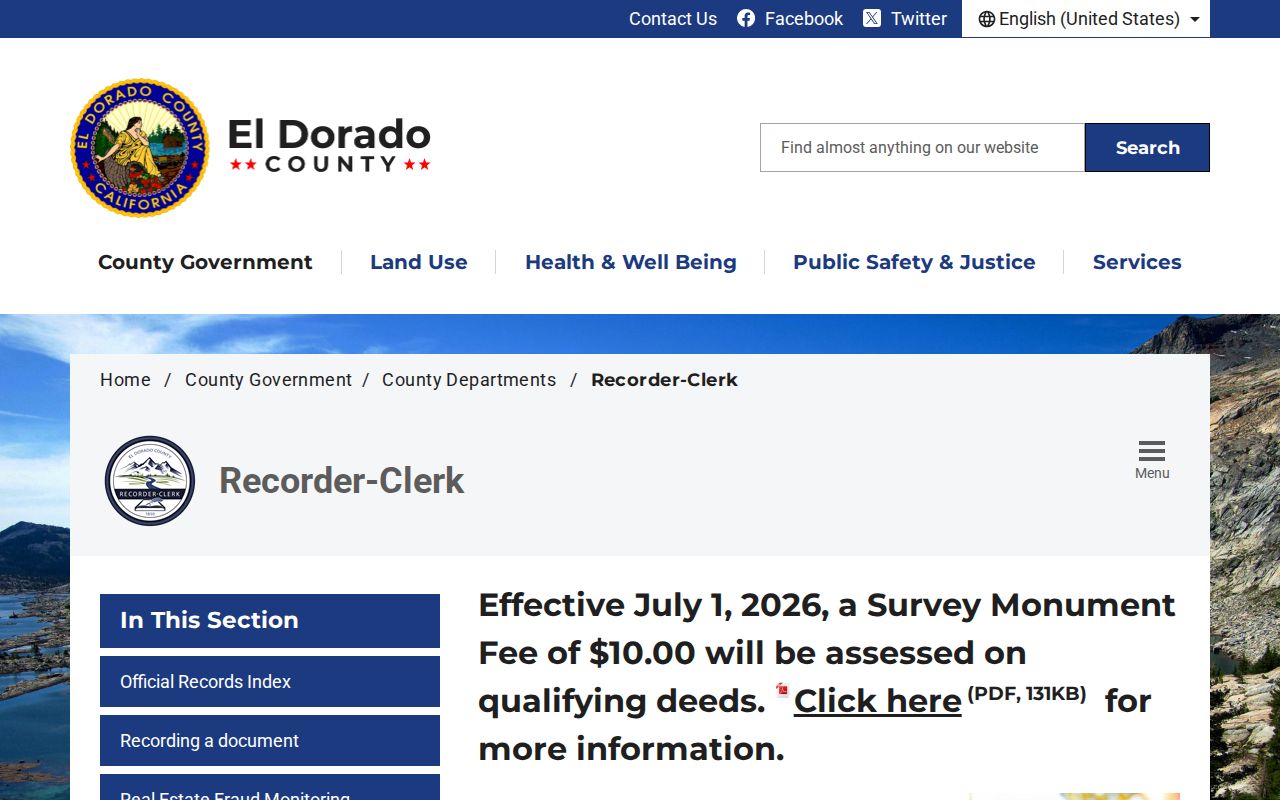
The Tahoe counter is at 3368 Lake Tahoe Boulevard #108, appointment-only Thursday 9:45 to 3:30, closed noon to 1:00, and no mail. Placerville accepts mail at 360 Fair Lane.
South Lake Tahoe Past Address Records
Parcel numbers are not permanent. Splits, combinations, tax-rate-area changes, book or page changes, mapping corrections, and lot-line adjustments can produce a new APN. A current search that fails to find an old owner may be using the right address with the wrong parcel history.
Follow historical property details and active, index, historical, and inactive assessor plats. Confirm the subdivision, lot and block, recorded map, or legal description. An assessor map supports assessment identification. A recorded parcel map or record of survey is prepared for legal lot or survey purposes. The Recorder also holds subdivision maps, parcel maps, surveys, easements, and lot-line adjustments.
A South Lake Tahoe house history is stronger when a new APN is tied to the old one by a recorded map or deed recital. Do not infer continuity from a street number alone.
South Lake Tahoe Historical Parcel Records
A public civic parcel example shows how a document number, tax-rate area, APN, situs, and historical plats can be used together. The inspected map book for 1901 Lisa Maloff Way includes images or references for 1960, 1962, 1965, 1966, 1967, 1970, 1972, 1984, 1986, 1990, 2015, and 2017. Those dates belong to that map book and do not establish coverage for every South Lake Tahoe parcel.
Use old map images to test whether a lot changed shape, split, combined, or received a new legal label. Then return to the deed chain. A map can explain land continuity, but the deed is the source for named parties.
The public parcel card is a useful model for separating map evidence from occupant evidence.
South Lake Tahoe Past Permit Dates
Permit records can add a construction or alteration date to a past-owner trail. City building and planning applications, inspection requests, payments, and project searches moved to eTRAKiT on April 14, 2025. Unincorporated Tahoe-area properties use the county Building Division. The public pages do not expose a complete legacy coverage range.
A permit may name an applicant, contractor, owner, address, scope, and project date. It does not establish that the applicant lived at the property. Pair a permit date with a deed recording date, assessor change, directory entry, census, probate, or obituary before describing a household transition.
The city Development Services page identifies the current permit transition. Use the correct jurisdiction before requesting older files.
South Lake Tahoe Directories Between Deeds
Directory material can place a listed business or occupant between two recorded transfers. Verified local editions include the 1979 South Lake Tahoe phonebook, 1985 Pacific Bell Directory, and Hill-Donnelly editions from 1989 and 1992. An environmental report also searched isolated years in 1971, 1977, 1981, 1986, 1990, 1992, 1995, 2000, 2005, 2010, 2014, and 2017.
Record the exact address and neighboring listing. A person or business missing from the next volume may have moved, changed its name, declined listing, or fallen outside that report's scope. The directory sequence supplies a bracket, not an exact departure date.
The complete collection history and reading method belong on the South Lake Tahoe city directory page. The present address chain belongs on the South Lake Tahoe street directory page.
South Lake Tahoe 1950 Census Records
NARA makes population schedules public through 1950 under the 72-year rule. The 1950 El Dorado search accepts location, first and last name, and enumeration district. A household schedule may supply relationships, ages, birthplaces, and occupations as enumerated. It is a snapshot, not a deed and not proof that the same people remained at the address.
For 1940 and earlier street work, derive an enumeration district when possible and browse images. Pair the census with a directory year, deed, plat, or newspaper. South Lake Tahoe's extensive Upper Bijou development occurred in the 1950s before city incorporation, which makes county and federal sources important.
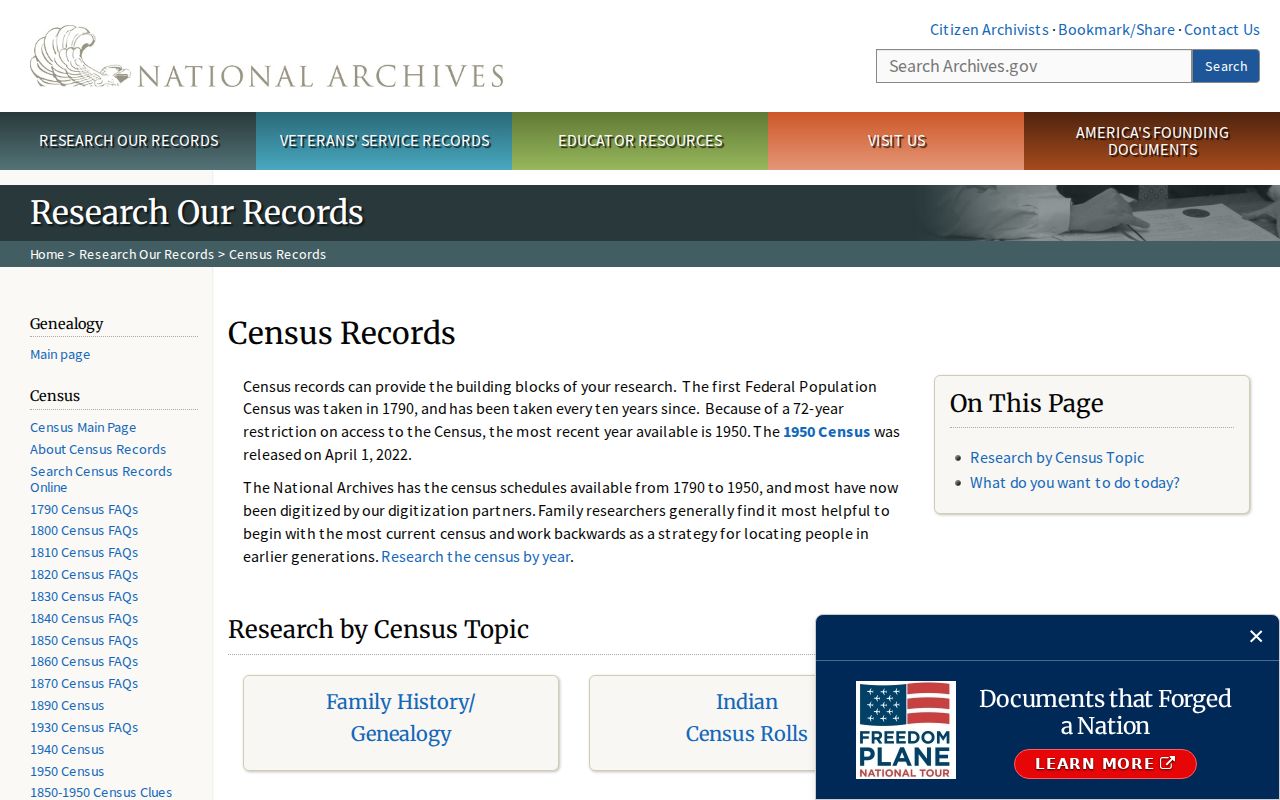
The National Archives census research page explains public years and access.
Use the county-filtered 1950 search for El Dorado rather than assuming a city label will appear exactly as it does today.
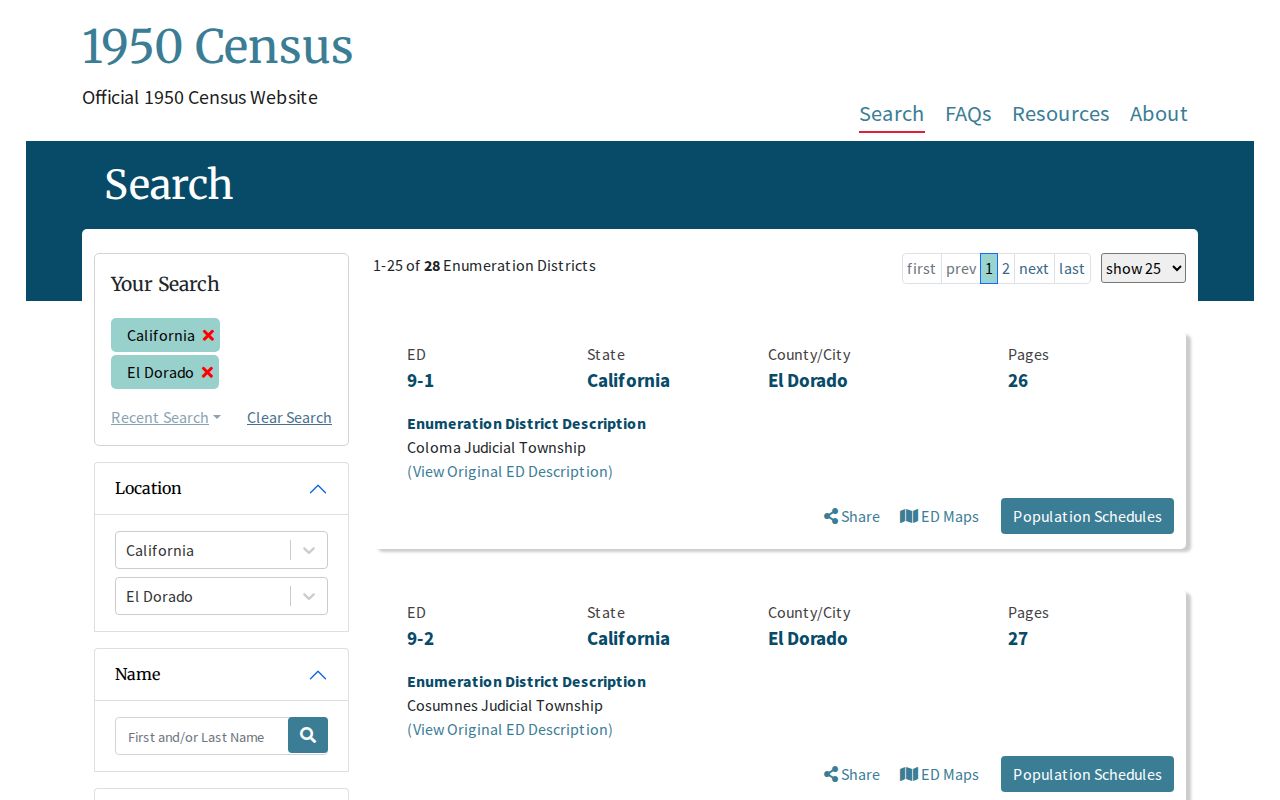
The 1950 tool narrows the county and year. The address interpretation still belongs to the researcher.
South Lake Tahoe Past Probate and Obituaries
Probate can close a title gap by identifying a decedent, heirs, petitions, orders, and filed addresses. Deeds can then show whether an heir or estate transferred the parcel. Obituaries and local memorial notices can explain a death or family link and can point toward the right probate case. These sources are endpoints and bridges, not a substitute for a recorded instrument. The county's AB 1466 historical deed review is another reminder that older instruments need careful individual reading.
McFarlane Mortuary publishes a local obituary and memorial archive with photographs and family stories. The El Dorado County Library points to local newspapers. Search variant surnames and venue names, then confirm dates with the Recorder-Clerk, court, or vital-record custodian.
A probate result may name an heir who never occupied the property. An obituary may mention a former address rather than the parcel being traced. Keep the source's wording and do not turn a family connection into an occupancy claim.
South Lake Tahoe Past Households
Previous residents can be reconstructed in layers. The deed chain supplies recorded title parties. The assessment roll supplies assessee and mailing evidence. Directory years and census schedules can show a listed or enumerated household. Permits add project dates. Probate and obituaries explain transfers or family connections. Each layer has a different date and purpose, so the final timeline should label “recorded owner,” “listed occupant,” “enumerated household,” and “possible link” rather than flattening them into one claim.
Lawful house history. Use an address trail for genealogy, estate research, historic preservation, and personal reconnection. Do not use it to stalk, harass, intimidate, or harm anyone. Non-owner occupants and protected households may never appear.
The research stops when the source stops. Sealed, confidential, juvenile, adoption, DMV, utility, protected voter, and private household records are not made open by a deed search. When a current question replaces the historical one, use the custodian-specific resident lookup path and verify the source date.